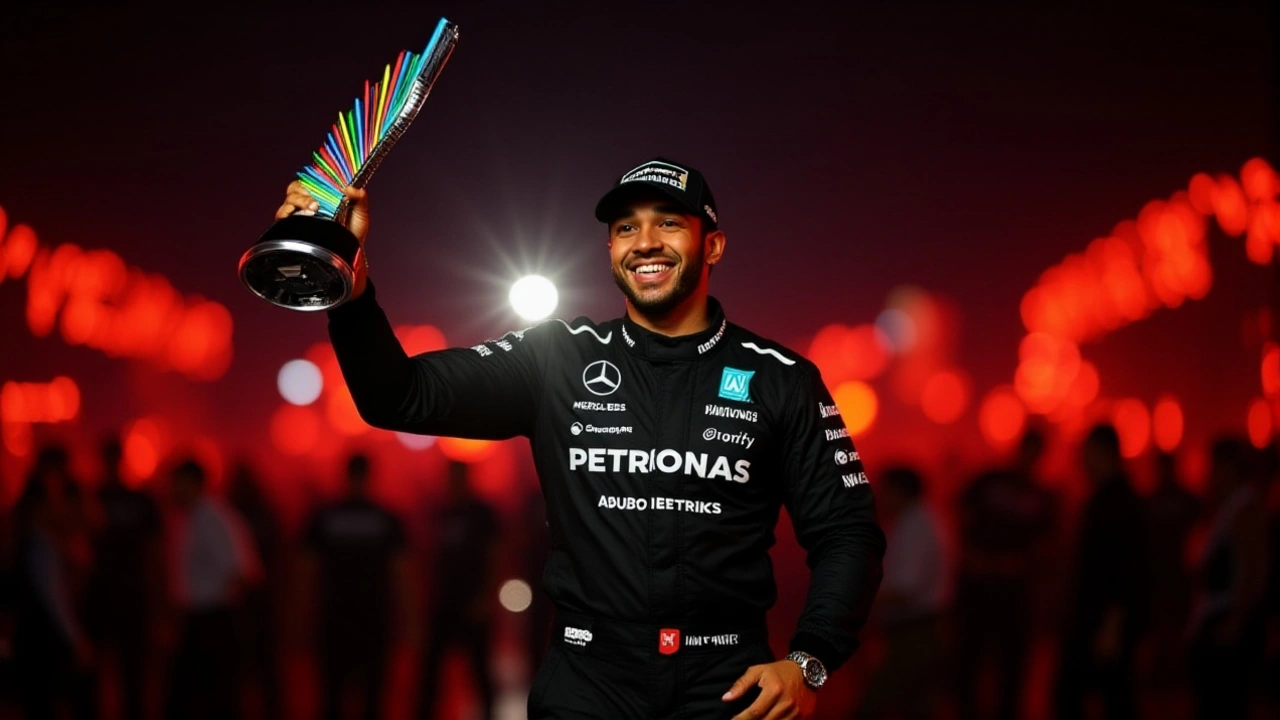
Mercedes-AMG PETRONAS Formula One Team is openly admitting they’re outgunned at the 2025 Las Vegas Grand Prix — and not just because McLaren’s Lando Norris is running away with the championship. Despite George Russell’s 2024 win on this very street circuit, the team’s tone is one of grim realism. The W16, once the benchmark of efficiency, now struggles to keep pace on high-speed tracks, and a last-minute setup sheet fiasco nearly cost them both starting positions. What’s left is a team fighting for second place in the Constructors’ Championship, not the title — and they know it.
Setup Sheet Near-Disqualification Sparks Drama
At precisely 20:12 local time on November 21, 2025, FIA technical delegate Jo Bauer issued a notice: Mercedes had not submitted mandatory setup sheets for either of their two Mercedes-AMG PETRONAS Formula One Team cars. Under Article 40.1 of the 2025 FIA Sporting Regulations, that meant automatic grid penalties — possibly starting from the back. The team had sent the files. They were certain of it. But the FIA’s internal system, overwhelmed by data traffic from 20 teams, had failed to register them. A glitch, not a breach. By 20:47, the system corrected itself. Russell kept his fourth-place grid slot; teammate Kimi Antonelli, eliminated in Q1, started 17th. "It was surreal," Antonelli admitted afterward. "We thought we were racing from the back. Then we got the email. We just stared at our screens. No one cheered. We’re too tired for that kind of rollercoaster."
McLaren’s Stranglehold on Las Vegas
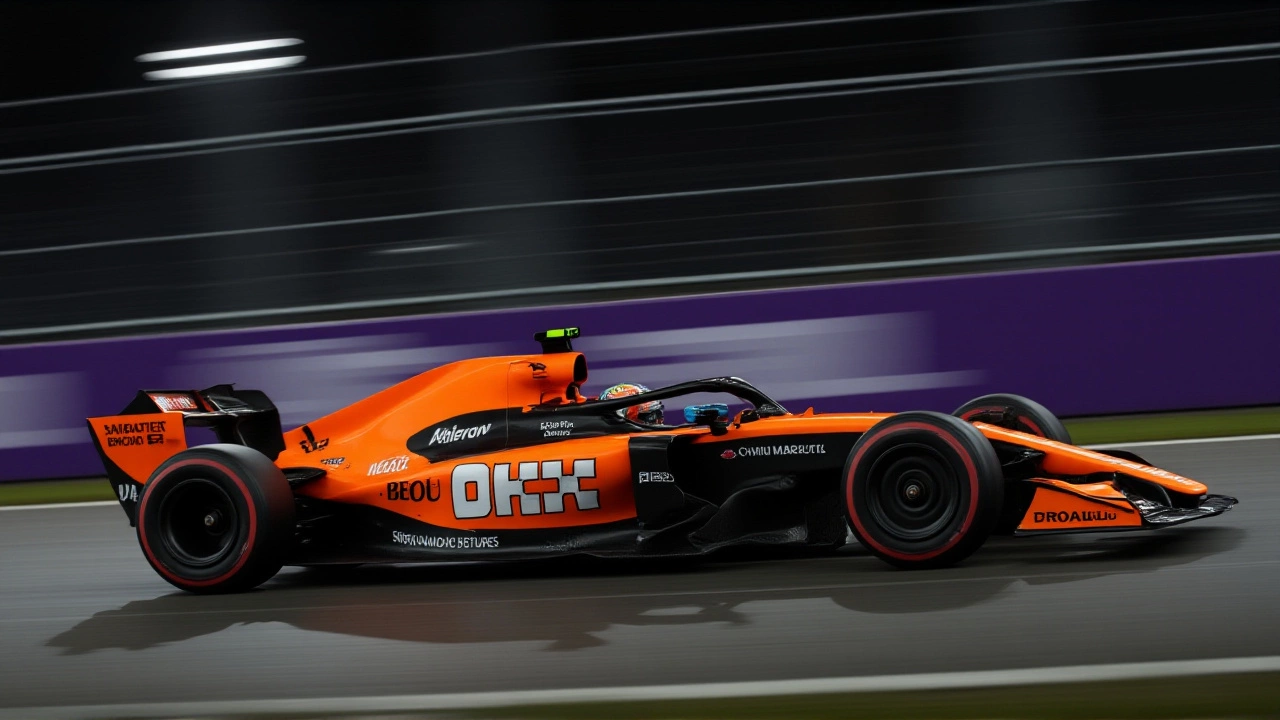
While Mercedes wrestled with bureaucracy, McLaren was dominating the track. Lando Norris clocked 1:33.602 in FP2 — the fastest lap of the weekend — with Antonelli just 0.029 seconds behind. Russell, in seventh, was 0.435 seconds off the pace. The difference wasn’t just qualifying. During long-run simulations, Norris’ MCL39 was a full 0.8 seconds per lap faster on soft tires — a gap that would turn a podium fight into a rearview mirror scenario. "The track eats Mercedes alive," said Arron Jones, F1 correspondent for Destination Formula 1. "Their rear wing can’t generate enough downforce without creating too much drag. On a street circuit with long straights and high-speed corners like Las Vegas, that’s a death sentence."
Why Las Vegas Is a Nightmare for the Silver Arrows
The Las Vegas Strip Circuit in Paradise, Nevada has always favored cars with strong aerodynamic efficiency and low tire degradation. Red Bull’s RB21 and McLaren’s MCL39 excel here. The W16, designed for high-downforce tracks like Monaco and Singapore, suffers from overheating rear tires on sustained high-speed corners. Engineers confirmed last week that the 2025 regulations — which tightened rear wing tolerances and reduced DRS effectiveness — exposed a fundamental flaw in Mercedes’ aerodynamic architecture. "We optimized for slow corners," admitted a senior Mercedes aerodynamicist, speaking anonymously. "This track is all about fast corners. We’re like a sprinter trying to win a marathon."
Winless Streak and Shifting Priorities
Mercedes hasn’t won a race since the 2025 Canadian Grand PrixMontreal — a 12-race drought. In that time, Norris has surged to 390 points in the Drivers’ Championship, 42 ahead of Russell’s 247. Max Verstappen, meanwhile, has clawed back from an 84-point deficit to just 42 behind Norris after his win in Austin, Texas on November 9, 2025. With only three races left — Las Vegas, then Abu Dhabi on December 7 — Mercedes’ goal is no longer the title. It’s the Constructors’ Championship. They lead Ferrari by 17 points. "We’re not here to win," Russell said bluntly after qualifying. "We’re here to make sure Ferrari doesn’t sneak past us. That’s the mission."
What’s Next? The Real Battle Begins
The 2025 Las Vegas Grand PrixLas Vegas Strip Circuit kicks off at 22:00 local time on November 22, 2025. Russell starts fourth — his best shot at points. But with McLaren and Red Bull likely to duel for victory, and Ferrari breathing down their necks, Mercedes’ race strategy will be about damage control. Tire management will be critical. A single safety car could shuffle the order. But don’t expect a miracle. "We’re not pretending anymore," said team principal Toto Wolff. "This isn’t about hope. It’s about discipline. We’ve got one job left: finish ahead of Ferrari."
Behind the Scenes: The Human Cost of the Struggle
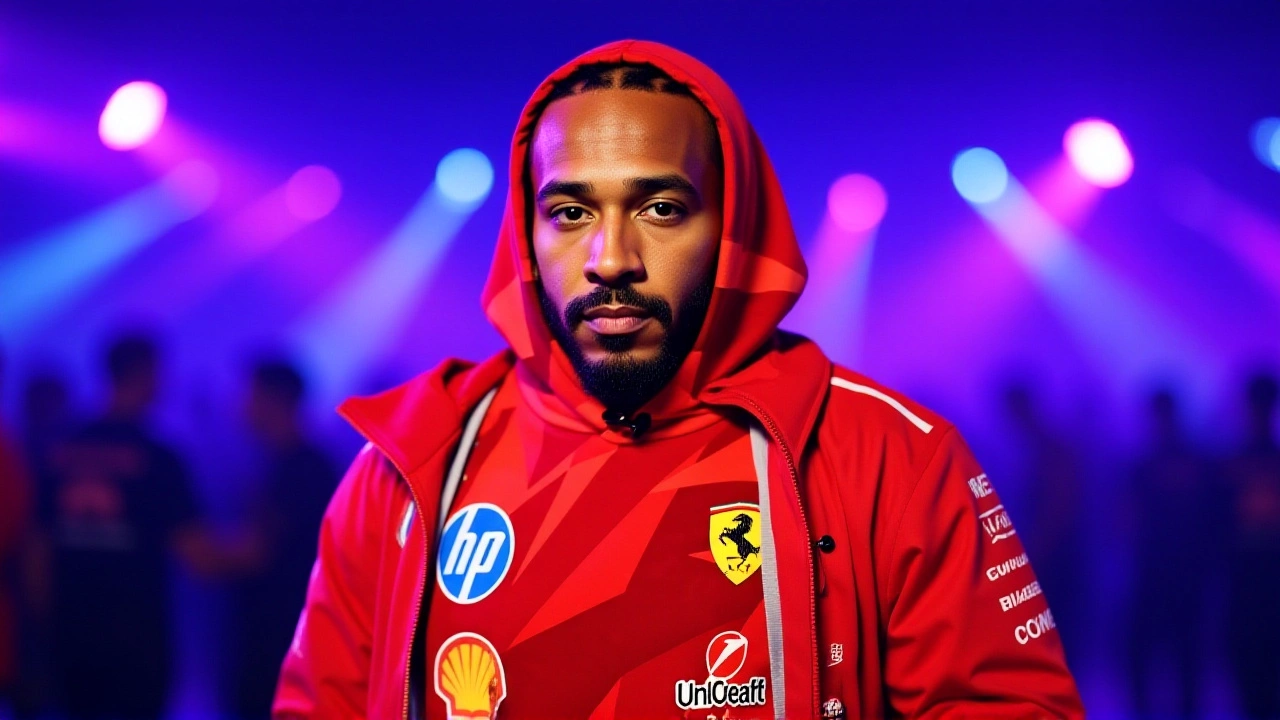
Inside the Mercedes garage, morale is low but not broken. The team’s technical staff worked 72 hours straight after the setup sheet glitch, reviewing every line of code in their submission system. Antonelli, just 19, is learning the brutal truth of F1: talent isn’t enough. "I thought coming in, if I was fast, they’d build a car around me," he said. "Now I see it’s the other way around. The car has to be right — and right now, it’s not."
For Russell, this is his fifth season with the team. He’s seen the highs — Hamilton’s final year, the 2024 Las Vegas win — and now the lows. "I’m not bitter," he said. "I’m just realistic. We’re not the fastest. And that’s okay. We still have pride. We still fight."
Frequently Asked Questions
Why did Mercedes miss the setup sheet deadline if they sent it on time?
A system-wide FIA data-processing bug delayed the receipt of Mercedes’ setup files despite the team submitting them before the 20:00 deadline. The error occurred during peak traffic from all 20 teams, causing a 45-minute lag in server acknowledgment. The FIA later confirmed it was a technical failure, not a team error, and reversed the penalty.
How does the W16’s aerodynamic flaw affect performance specifically in Las Vegas?
The W16’s rear wing generates insufficient downforce without excessive drag on high-speed straights, causing rear tire degradation to spike. On the Las Vegas circuit’s 1.8-mile main straight and high-speed Turns 11–13, the car loses 0.8 seconds per lap compared to McLaren’s MCL39 — a gap that’s nearly impossible to overcome in race trim without multiple pit stops.
What’s at stake for Mercedes beyond the race?
Mercedes leads Ferrari by 17 points in the Constructors’ Championship. A single DNF or poor finish could allow Ferrari to overtake them. Securing second place would be their best result since 2022, and it would mean over $40 million in prize money — critical for next year’s development budget.
Is Kimi Antonelli’s performance a sign of future success for Mercedes?
Yes. Antonelli, despite being a rookie, was only 0.029 seconds behind Norris in FP2 — faster than Russell. His raw speed suggests the team’s underlying chassis potential remains strong. If Mercedes fixes the aerodynamic issues by 2026, Antonelli could be their lead driver — especially if Russell departs for a more competitive team.
Could a red flag or safety car change the outcome for Mercedes?
Absolutely. With Russell starting fourth and Antonelli 17th, a safety car would bunch the field and neutralize McLaren’s pace advantage. Mercedes’ race pace is closer to the front than qualifying suggests. If they can avoid tire wear and pit strategy errors, a podium is still possible — but it would require chaos, not just skill.
What’s the significance of the Las Vegas GP in the 2025 championship?
It’s the penultimate race before the Abu Dhabi finale. With Norris and Verstappen separated by just 42 points, Las Vegas could decide the title. For Mercedes, it’s a chance to cement second in the Constructors’ Championship — and a final opportunity to prove their car isn’t completely obsolete before the 2026 regulation overhaul.