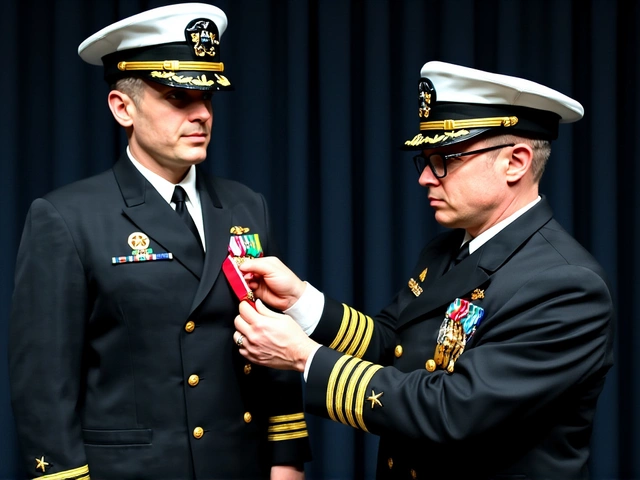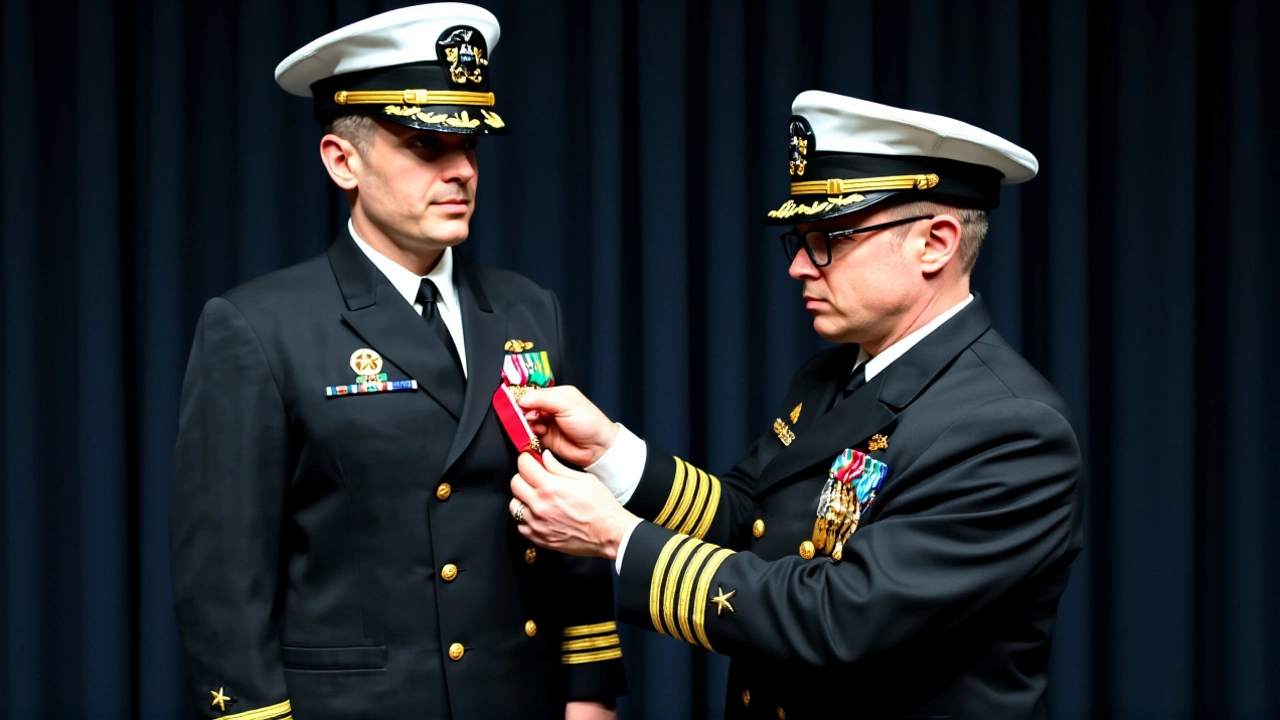
Command changes in the nuclear submarine fleet are rarely loud affairs, but they carry the weight of national security on their shoulders. On March 13, 2026, Cmdr. Matthew Fisher, Commanding Officer of USS Nevada (SSBN 733) Gold Crew, officially took the helm from Cmdr. George Watkins during a formal relief ceremony. The event wasn't held at sea or in a bustling port, but rather at the quiet, historic halls of the U.S. Naval Undersea Museum in Keyport, Washington.
Here's the thing about commanding an Ohio-class ballistic missile submarine: you don't just get the job. You earn it through years of rigorous training, deep-sea deployments, and an unshakeable commitment to deterrence. This transition marks a seamless handover for the Gold Crew of USS Nevada (SSBN 733), one of the Navy's most critical assets in maintaining strategic stability.
A Quiet Transition with Heavy Implications
The ceremony itself was straightforward, adhering to naval tradition while highlighting the professionalism of both officers. According to official documentation published on the Defense Visual Information Distribution Service (DVIDS), the relief occurred precisely on March 13, 2026. The metadata attached to the official imagery confirms the date as "03.13.2026," leaving no ambiguity about when this leadership baton was passed.
Why hold it at a museum? It’s a nod to heritage. The U.S. Naval Undersea Museum isn't just a repository of old periscopes and uniforms; it's a place where submariners reflect on the lineage of their service. Holding the change of command there underscores the continuity between past heroes and current guardians of the nation's nuclear deterrent.
"Battle Ready!" read a post on the SubGru9 Facebook page, capturing the spirit of the occasion. That phrase isn't just hype; it's the operational standard. When Cmdr. Matt Fisher—often referred to by his nickname in informal circles—took charge, he assumed responsibility for a crew that must remain prepared to launch at a moment's notice, day or night, anywhere in the world's oceans.
The Weight of the Command
To understand the significance, you have to look at what USS Nevada actually is. It’s an Ohio-class submarine, designated SSBN-733. The "SSBN" stands for Submarine, Ballistic Missile, Nuclear-powered. These vessels are the backbone of the United States' nuclear triad. They sit silent and dark beneath the waves, carrying Trident II D5 missiles capable of striking targets thousands of miles away.
The "Gold Crew" designation refers to one of two teams that rotate command and maintenance duties. While the Silver Crew handles the boat during certain periods, the Gold Crew ensures continuous readiness. Cmdr. George Watkins led this team with distinction, preparing the vessel and its personnel for future patrols. Now, Cmdr. Matthew Fisher steps into those boots, inheriting a complex machine and a highly skilled team.
This isn't a promotion in the traditional corporate sense—it's a trust transfer. Both men hold the rank of Commander (O-5), but the authority wielded by a CO of an SSBN is immense. They are responsible for the safety of over 130 crew members, the integrity of a multi-billion-dollar warship, and the execution of missions that could alter the course of human history.

What Happens Next?
Following the ceremony, the focus shifts immediately back to operations. There are no long vacations for incoming submarine commanders. Fisher will likely begin with a thorough review of the crew's qualifications, equipment status, and upcoming deployment schedules. The Navy operates on tight timelines, and any delay can ripple through the entire fleet's readiness posture.
Observers note that transitions like this are routine yet vital. The U.S. Navy maintains a constant cycle of command changes to ensure fresh perspectives and prevent complacency. As geopolitical tensions fluctuate globally, the need for reliable, experienced leaders like Fisher becomes even more pronounced.
We may not see much public detail about Fisher's specific plans or Watkins' next assignment—that's classified information for good reason. But the message sent to allies and adversaries alike is clear: the watch continues, uninterrupted and vigilant.
Historical Context of the USS Nevada
USS Nevada has been in service since the late 1980s, making it a veteran of decades of Cold War tension and modern conflict prevention. Like many Ohio-class boats, it has undergone numerous refueling and overhaul periods to extend its lifespan. Its presence in the Pacific Fleet adds depth to America's undersea warfare capabilities.
The choice of Keyport for the ceremony also ties into local military culture. The Puget Sound region has a rich history of shipbuilding and submarine operations. From the nearby Naval Base Kitsap to the historic museums, this area is ground zero for American undersea power. For locals, seeing these ceremonies is a reminder of the invisible shield protecting their communities.
Frequently Asked Questions
Who is Cmdr. Matthew Fisher?
Cmdr. Matthew Fisher is the newly appointed commanding officer of the USS Nevada (SSBN 733) Gold Crew. He relieved Cmdr. George Watkins on March 13, 2026, taking full responsibility for the submarine's operations, crew welfare, and mission readiness. His appointment signifies a high level of trust from Navy leadership in his tactical and managerial abilities.
What does "Gold Crew" mean?
Ohio-class submarines operate with two crews, designated Gold and Silver. They rotate duties, allowing the submarine to spend more time at sea on patrol while the other crew conducts maintenance and training. The Gold Crew is currently assigned to the USS Nevada, ensuring continuous operational capability without extended downtime.
Where did the change of command take place?
The ceremony was held at the U.S. Naval Undersea Museum in Keyport, Washington. This location was chosen to honor the history and tradition of the submarine force. The museum serves as a cultural hub for the undersea community, making it a fitting backdrop for such a significant professional milestone.
Why is the USS Nevada important?
USS Nevada is an Ohio-class ballistic missile submarine, a key component of the U.S. nuclear deterrent. Equipped with Trident II D5 missiles, it provides strategic stability by ensuring a second-strike capability. Its stealth and endurance make it one of the most powerful weapons platforms in the global arsenal.
When did this command change occur?
The official relief of command took place on March 13, 2026. This date is confirmed by official Navy records via DVIDS and corroborated by social media posts from associated naval groups. The timing aligns with standard rotation cycles for submarine commanding officers.